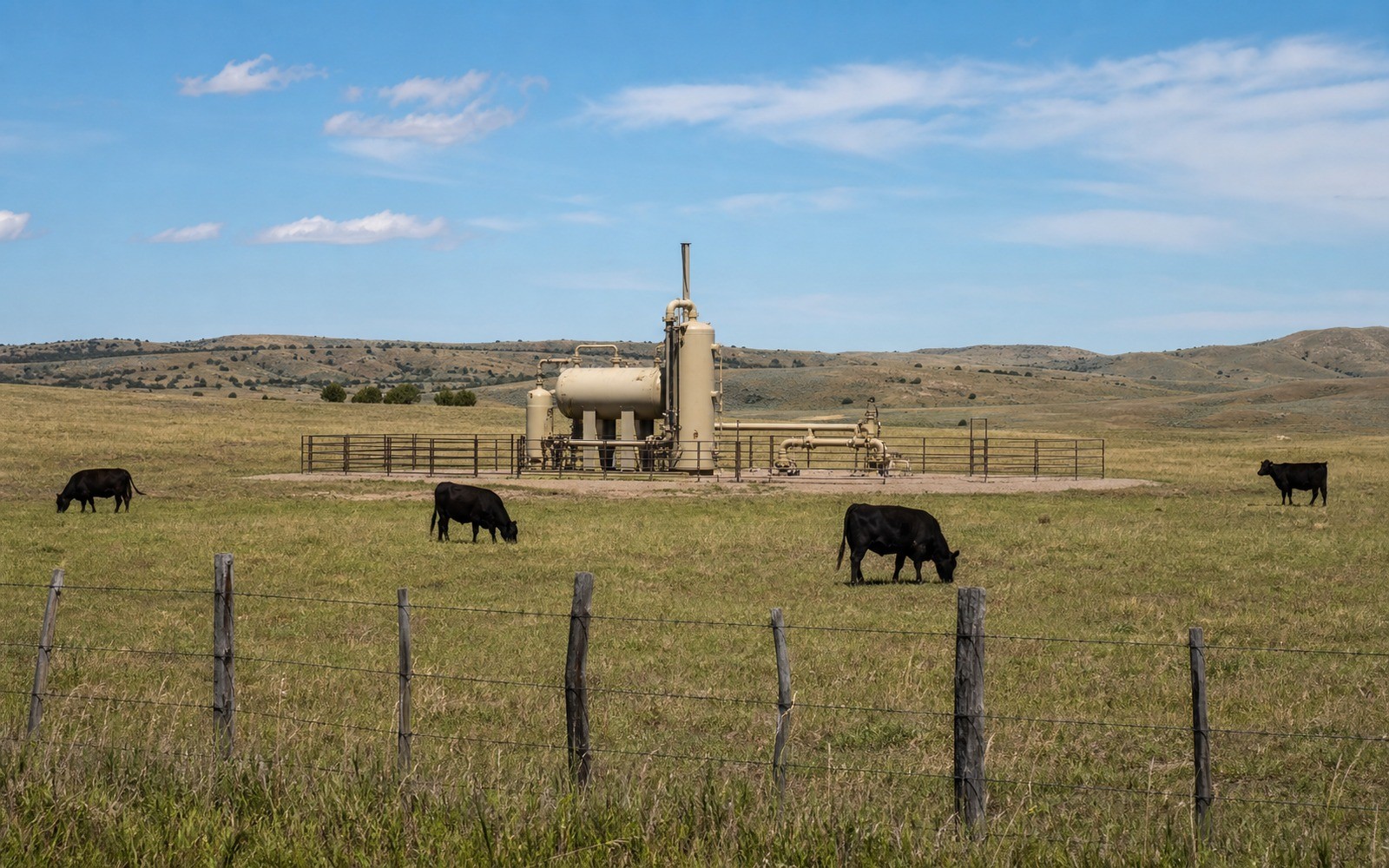
The Powder River Basin has lived two separate lives, a coalbed methane gas boom in the 2000s and a newer horizontal oil chapter since, and which one your family's minerals belong to changes the whole conversation.
Ranch families across Campbell, Johnson, and Converse County in Wyoming, and up into southeast Montana, have watched the Powder River Basin transform more than once. The coalbed methane boom of the 2000s brought thousands of shallow gas wells across the basin, densely spaced and often visible right on working ranchland. More recently, operators have targeted deeper conventional and unconventional oil zones, the Niobrara, Turner, and Sussex among others, with horizontal wells that look and behave nothing like the old coalbed methane pattern.
If your family's royalty history goes back to the coalbed methane years, you're likely dealing with legacy gas production that's well past its peak. If your minerals have been leased more recently for horizontal oil development, you're in an entirely different, more current situation. We ask which era your production comes from before anything else, because it shapes everything about value here.
Powder River Basin coalbed methane wells, like those in Alabama's Black Warrior Basin, produce gas from coal seams through a dewatering process, and the basin's boom years saw enormous numbers of shallow wells drilled across a huge footprint. Gas prices in the years since have made a lot of that legacy production marginal, and plenty of older coalbed methane wells have been shut in or plugged entirely as they reached the end of economic life.
If your check has gone quiet or stopped, that's unfortunately common for coalbed methane interests in this basin at this point in the cycle. We'll tell you honestly if that's what we're seeing rather than pricing a dead interest as though it still has meaningful production.
Since roughly the mid-2010s, operators have brought horizontal drilling to the Powder River's deeper conventional zones, targeting formations like the Niobrara, Turner, Sussex, and Parkman with techniques borrowed from shale plays elsewhere. This newer development is fundamentally different from the coalbed methane era: fewer wells, drilled deeper, producing more oil-weighted output with the steeper decline curves typical of modern horizontal completions.
If your lease dates from this more recent period, your production profile and value drivers look much more like a Bakken or Eagle Ford interest than a legacy Wyoming gas well.
The Powder River Basin's development has happened largely on working cattle ranches, and surface use agreements, road access, and reclamation obligations remain a real, ongoing part of life for a lot of families here even as mineral ownership changes hands. Selling your mineral interest doesn't typically affect existing surface use agreements tied to a specific well, but it's worth understanding how those interact if your family also holds the surface.
We ask about your surface ownership situation specifically, since a lot of Powder River sellers hold both the minerals and the ranch above them, and that combination deserves a clear-eyed conversation.
If your family's paperwork is unclear about whether your production comes from a coalbed methane well or a newer horizontal target, the well name and API number on your check stub or division order will settle it quickly through Wyoming Oil and Gas Conservation Commission records. That single detail changes almost everything about how we'd approach valuing your interest.
We'd rather spend the time confirming that up front than make assumptions based on how old your lease paperwork looks, since some families hold both eras of production on overlapping acreage.
Possibly little to nothing if the well has been shut in or plugged, which has happened to a lot of legacy Powder River coalbed methane wells. We check current well status before making any offer rather than assuming production continues.
Recent horizontal development targets deeper zones like the Niobrara, Turner, and Sussex, producing more oil-weighted output with steeper decline curves than the older shallow coalbed methane wells, more similar to shale-style unconventional plays elsewhere.
Generally not; existing surface use agreements tied to a specific well typically stay with the well and operator. We discuss your specific surface ownership situation before any sale to make sure that's clearly understood.
Campbell, Johnson, Converse, and Sheridan counties in Wyoming, extending into southeast Montana counties like Powder River and Rosebud, make up the core basin.
A recent check stub or division order, and ideally the well name, is enough for us to start. From there we pull public production and permitting records ourselves.
The same tract, deed chain, lease, division order, payor account, wells, and deductions carry into each of these reviews.
Own Marcellus Shale gas royalty in Pennsylvania or West Virginia? We buy family mineral interests, old lease language and all, no pressure to sign.
Own Utica Shale mineral rights in eastern Ohio? We buy family gas and NGL royalty interests, dual-formation Marcellus questions included.
Own Niobrara formation mineral rights across Colorado, Wyoming, or Nebraska? We buy chalk-play royalty interests wherever the geology takes them.
Share the county and state, owner name, operator or payor, recent statement, deed or lease if available, and the question behind the inquiry.