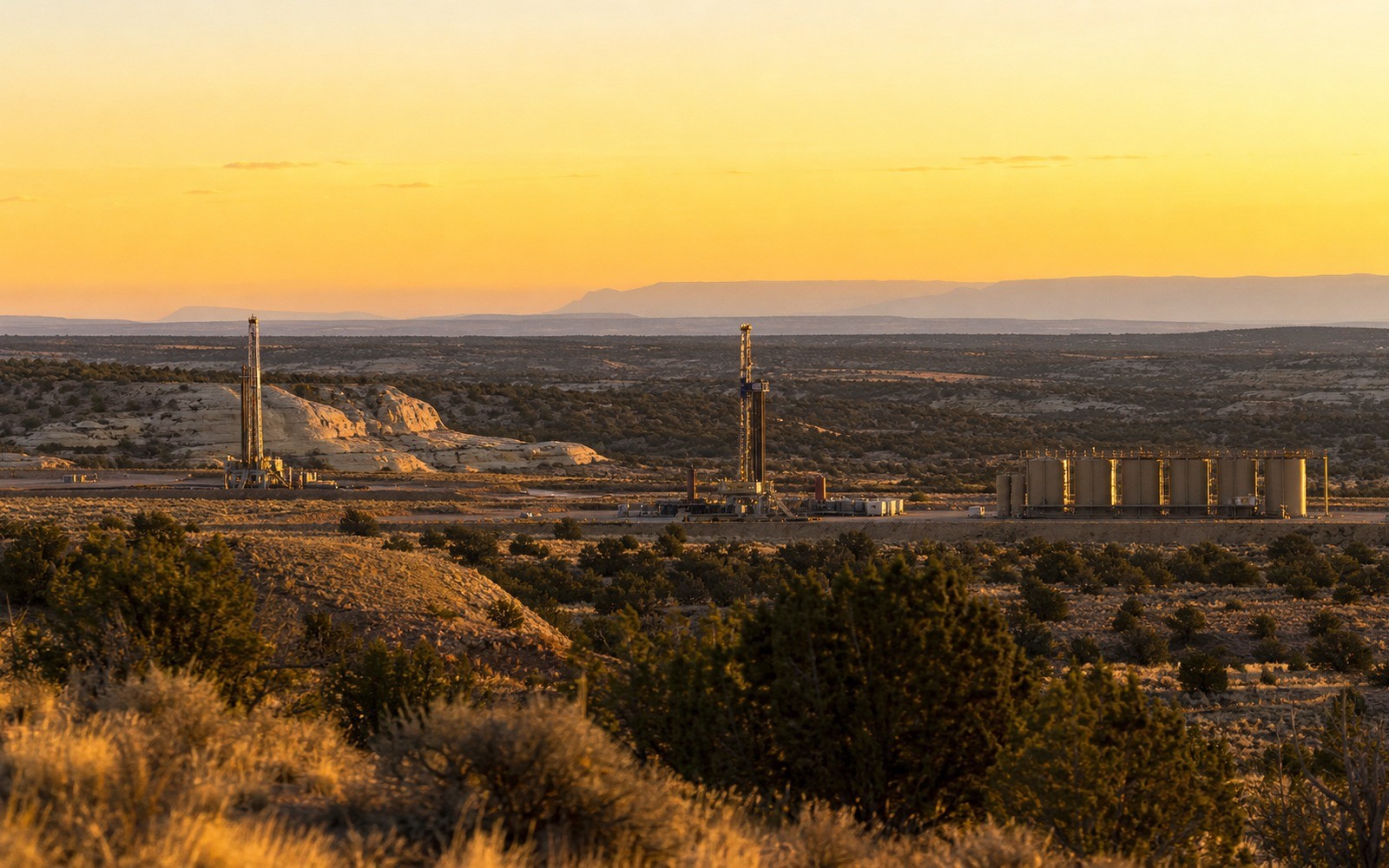
Eastern Utah's Uinta Basin produces an oil so waxy it has to stay warm just to keep flowing, and that one geologic quirk shapes how the whole basin gets developed and transported.
Families in Duchesne and Uintah County, Utah, have been dealing with the Uinta Basin's oil and gas since well before the recent wave of horizontal drilling brought renewed attention to the area. What sets this basin apart, and what any owner here should understand, is the unusual character of its crude: Uinta Basin oil is notably waxy, meaning it solidifies at temperatures that wouldn't affect a normal crude, which has real consequences for how it's produced, stored, and shipped.
That waxy crude challenge, combined with the basin's relative geographic isolation from major pipeline infrastructure, has shaped the economics of Uinta Basin development in ways that are specific to this basin and worth understanding before valuing a family's interest here.
Uinta Basin crude has to be kept heated through much of the production, storage, and transportation process to prevent it from solidifying, which adds cost that a conventional light crude producer wouldn't face. Historically, a lot of Uinta oil moved by heated rail cars rather than standard pipeline, since pipeline infrastructure in this remote basin has lagged behind more established plays.
This matters for royalty owners because it affects the netback operators actually realize on Uinta crude relative to benchmark oil prices, which in turn affects the deductions and pricing differentials that show up on your check stub.
The Uinta Basin has a long conventional oil and gas production history predating more recent horizontal drilling in zones like the Wasatch and Mesaverde. As in other mature basins with newer overlays, it's common for a family's mineral estate to include both older, established production and more recent horizontal development on the same or nearby acreage.
We look at the full history of your interest, not only the most recent lease, since older conventional wells here sometimes get overlooked when attention shifts to newer horizontal activity.
In recent years, there's been meaningful investment in improving how Uinta Basin crude gets to market, including efforts around rail capacity specifically built to handle heated, waxy crude in larger volumes. That kind of infrastructure investment can meaningfully change the economics for producers in this basin over time, which is worth factoring into how we think about longer-term value here.
We stay current on infrastructure developments in the Uinta specifically, since this basin's economics are more sensitive to transportation solutions than most.
A lot of Uinta Basin mineral owners come from ranching and farming families who worked the land long before anyone talked about waxy crude economics or rail capacity. For a lot of these families, the mineral check has always been a secondary piece of a larger operation rather than the main event, and that shapes how we approach the conversation.
Whether you're actively ranching the same ground your minerals sit under or you inherited a fractional interest with no remaining tie to the land, we'll walk through your production history and explain our offer in plain terms before asking for a decision.
Because so much of the Uinta Basin's economics hinge on how efficiently crude actually gets to market, we keep a closer eye on infrastructure news here than we might in a basin with straightforward pipeline access. A meaningful expansion in rail capacity or a new pipeline announcement can shift the outlook for producers in ways that a basin with established infrastructure simply doesn't experience.
We'd rather base an offer on the current, verifiable state of that infrastructure and your specific well's production than on speculation about where things might head next.
It has a high paraffin content that causes it to solidify at temperatures that wouldn't affect typical crude oil, requiring heating throughout production, storage, and transport, which adds cost compared to conventional light crude.
Historically, pipeline infrastructure has lagged in this remote basin, with a significant share of production historically moved by heated rail. Infrastructure investment has been improving, which affects the basin's longer-term economics.
The Wasatch and Mesaverde formations are among the primary targets for more recent horizontal development, alongside decades of older conventional production from multiple formations.
Duchesne and Uintah counties in eastern Utah hold the core of Uinta Basin oil and gas production, spanning both conventional and horizontal development across decades of drilling history in the basin.
Yes, since it shapes the netback and deductions reflected in your royalty history, which is a core input into how we value your interest before making an offer.
The same tract, deed chain, lease, division order, payor account, wells, and deductions carry into each of these reviews.
Own Green River Basin gas royalty in Wyoming? We buy Pinedale, Jonah, and Wamsutter-area mineral interests, federal split-estate complications included.
Own Fayetteville Shale gas royalty in the Arkoma Basin? We buy mature Arkansas mineral interests from families in Conway, Van Buren, and White County.
Own Smackover Formation oil royalty in Arkansas or Louisiana? We buy legacy interests from one of the South's oldest producing formations, brine and all.
Share the county and state, owner name, operator or payor, recent statement, deed or lease if available, and the question behind the inquiry.